How eSIM Works: Everything You Need to Know Before Your Vietnam Trip
Arriving in Vietnam without mobile internet can slow down your travel experience right from the airport. Most visitors need immediate access to maps, ride-hailing apps like Grab, translation tools, and messaging platforms after landing.
Instead of searching for a SIM kiosk or replacing your physical card, many travelers now choose a faster digital solution. Understanding how eSIM works before your trip helps you connect immediately and avoid unnecessary setup delays.
In this guide, you'll know:
how eSIM technology works
how activation happens inside Vietnam’s mobile network
why travelers prefer travel eSIM solutions instead of airport SIM cards
how to prepare your device before departure
eSIM Technology Explained: From Physical SIM to Embedded Connectivity
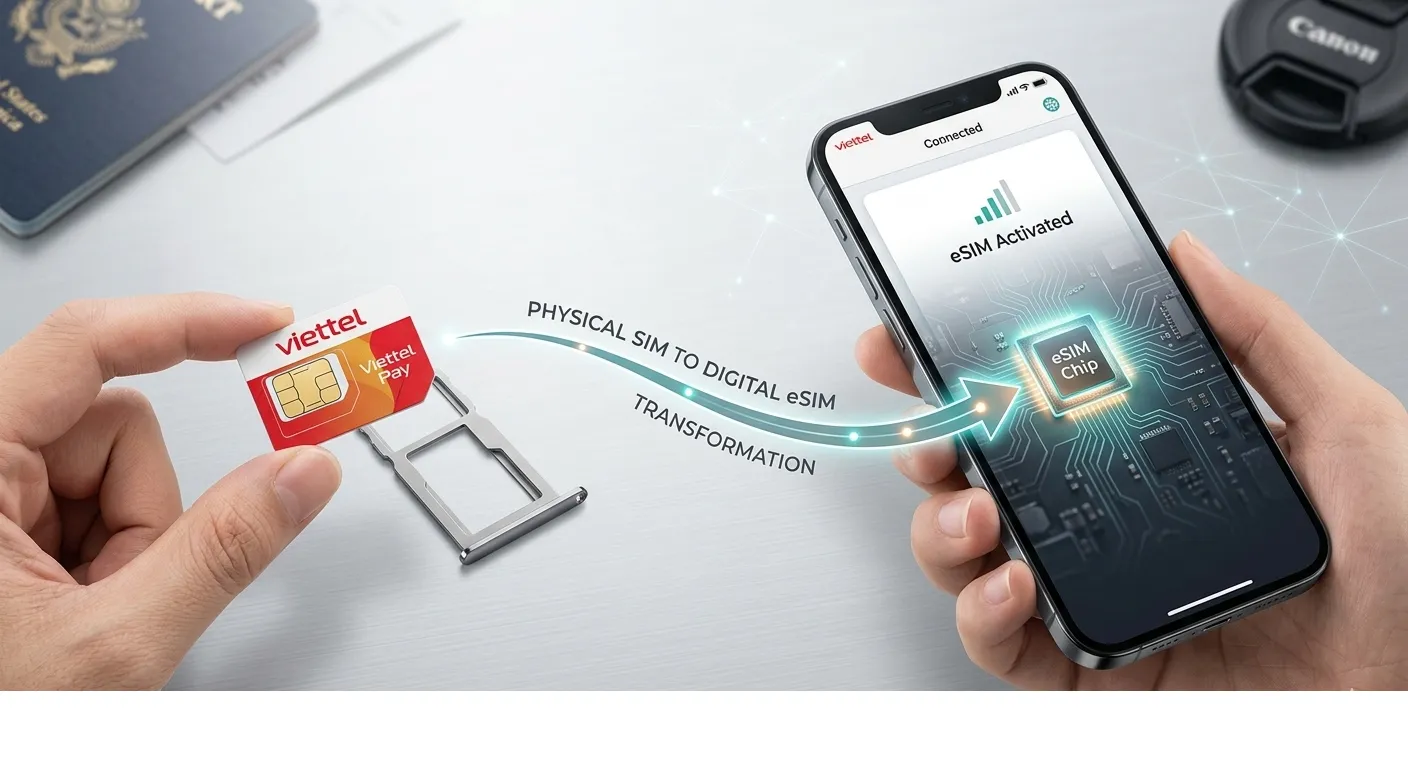
To understand how eSIM works, it helps to look at how SIM cards evolved.
Traditional SIM cards were removable plastic chips storing subscriber credentials. Over time, they became smaller—from Mini to Micro and finally Nano-SIM format used today.
An eSIM (embedded SIM) works differently. Instead of inserting a removable card, your phone already contains a programmable chip installed during manufacturing.
This chip is called the eUICC (Embedded Universal Integrated Circuit Card).
Because the SIM is integrated into your device hardware:
switching carriers becomes digital
no SIM tray opening is required
installation takes less than one minute
profiles can be stored simultaneously
This allows travelers to activate a Vietnam travel eSIM plan within minutes after receiving a QR code.
The eUICC: The Core Behind eSIM Connectivity
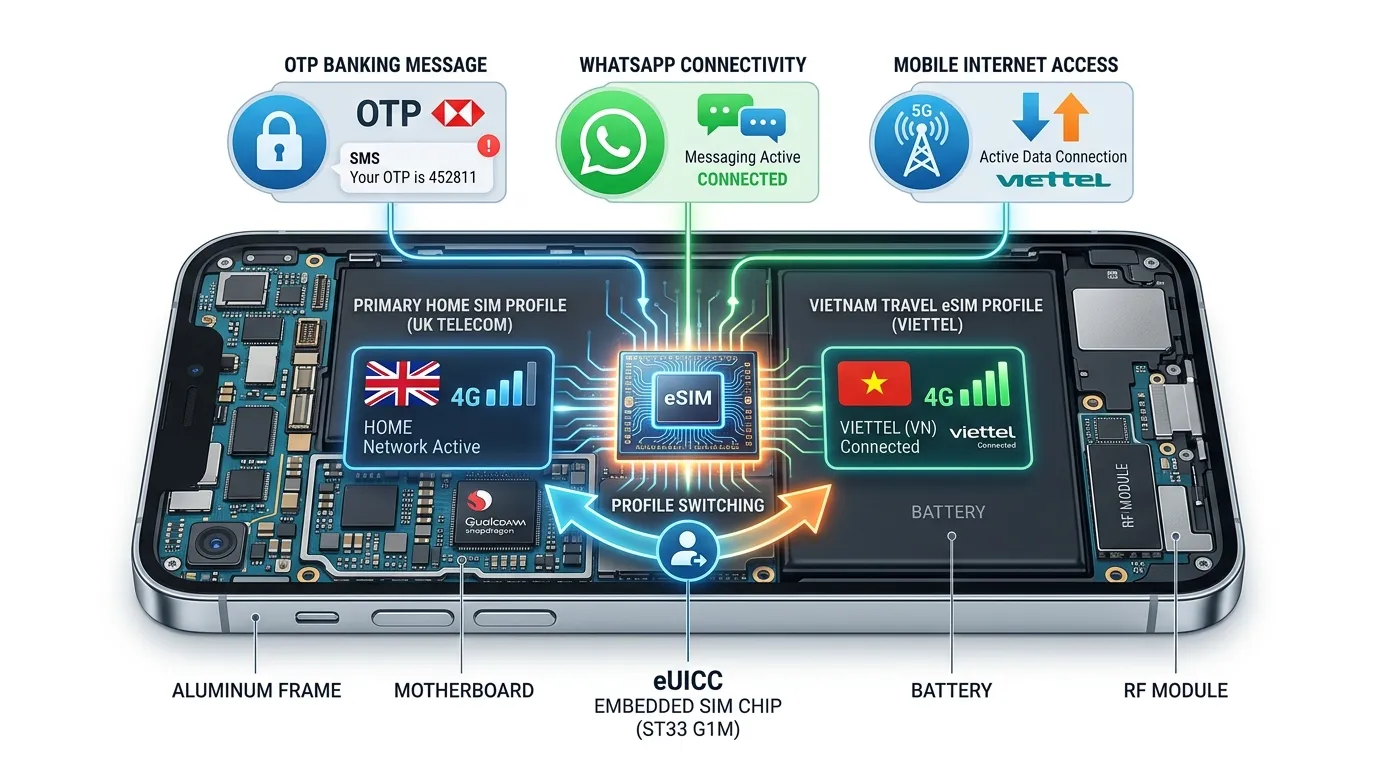
The eUICC is the component that makes digital SIM switching possible.
Unlike traditional SIM cards that support only one carrier at a time, the eUICC can store multiple profiles simultaneously.
For travelers, this means you can:
keep your home SIM active
receive banking OTP verification codes
stay reachable via WhatsApp or iMessage
switch between profiles anytime
This flexibility is one reason international visitors increasingly choose travel eSIM solutions for Vietnam trips.
The GSMA Standard That Makes eSIM Work Globally
eSIM technology is supported by a global framework developed by the GSMA (Global System for Mobile Communications Association).
This standard allows smartphones to securely connect with mobile networks worldwide.
It enables:
Global interoperability
Devices remain compatible across countries and operators.
Remote provisioning
Profiles can be installed digitally without visiting a store.
Secure authentication
Users connect safely without replacing physical SIM cards.
Because of this system, travelers can install their eSIM before departure and activate connectivity immediately after landing in Vietnam.
Remote Provisioning: How eSIM Profiles Reach Your Phone
The technology behind activation is called remote provisioning.
Instead of storing credentials inside plastic SIM cards during manufacturing, your network profile is delivered securely over the air when needed.
What Is an eSIM Profile?
An eSIM profile is a secure configuration package containing:
authentication credentials
data usage permissions
carrier configuration settings
APN and network identifiers
After purchasing a plan, travelers receive this profile via QR code.
What Happens When You Scan an eSIM QR Code?
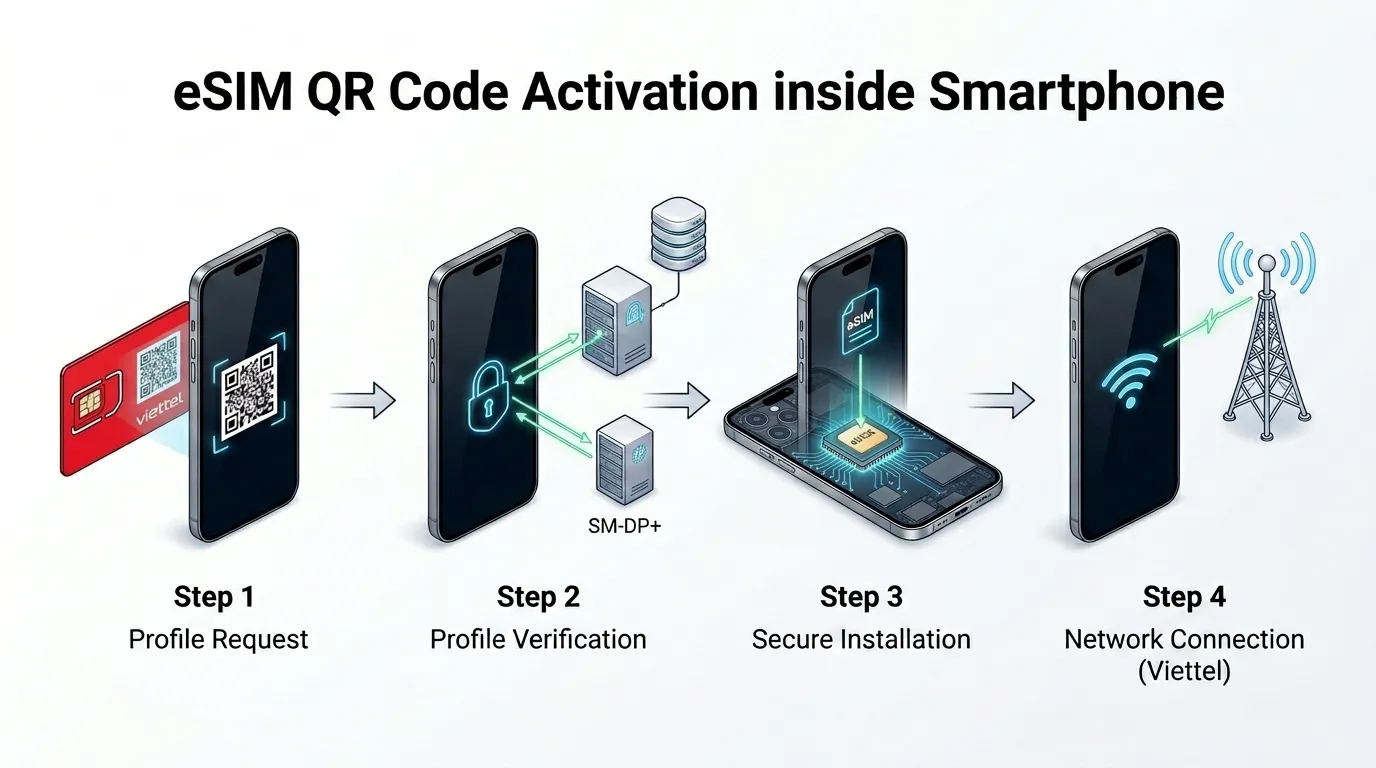
Behind the scenes, your phone performs a secure activation sequence:
Step 1 — Profile request
Your device connects to a secure carrier server called SM-DP+.
Step 2 — Profile verification
Activation credentials are validated.
Step 3 — Secure installation
The encrypted profile downloads into your phone’s eUICC chip.
Step 4 — Network connection
After landing in Vietnam, your device connects automatically to a supported local network such as Viettel.
This process usually takes less than one minute.
How eSIM Works in Vietnam for International Travelers
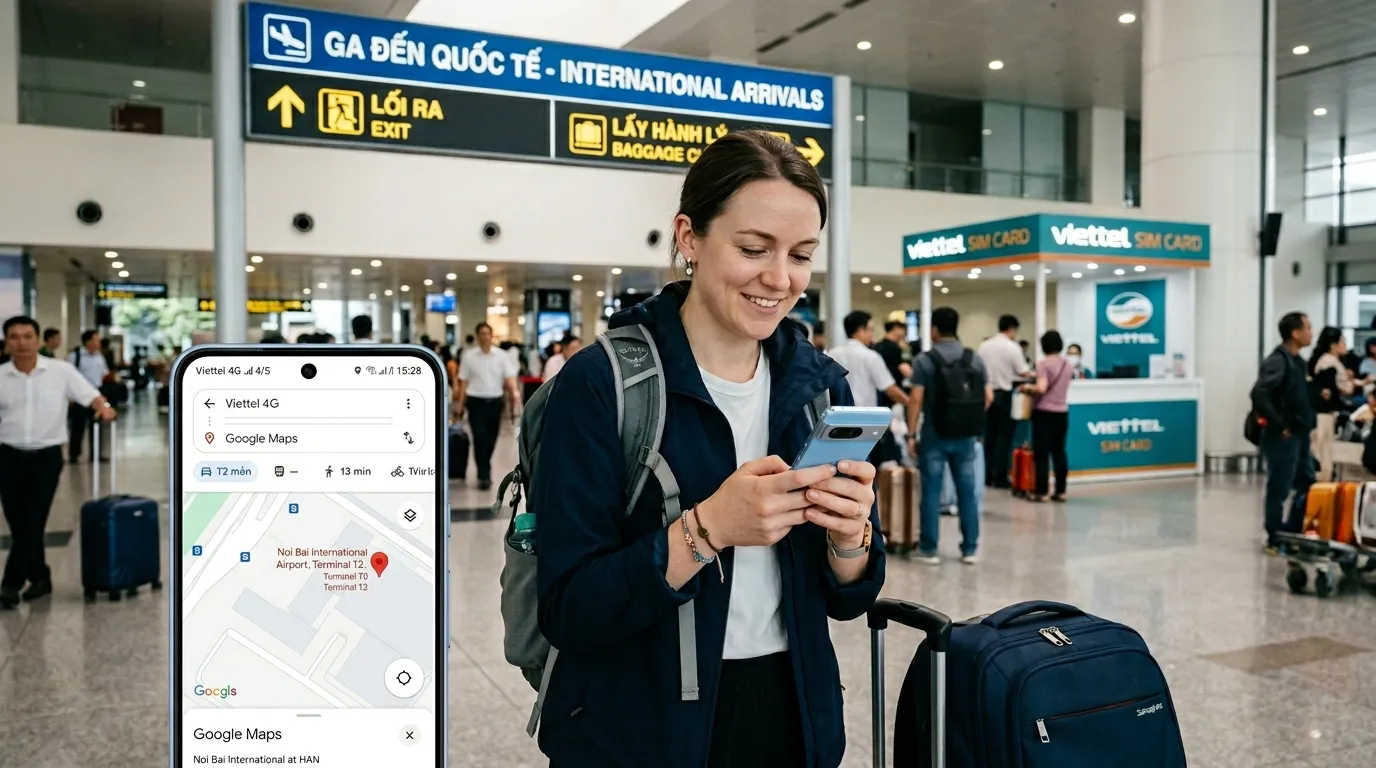
Vietnam has one of Southeast Asia’s strongest mobile infrastructures, with reliable nationwide 4G coverage and expanding 5G availability in major cities.
Understanding how eSIM works in Vietnam helps explain why digital installation is replacing traditional tourist SIM Vietnam purchases.
Instead of:
waiting at airport counters
showing passport copies
changing SIM cards manually
travelers simply:
purchase online before departure
receive a QR code instantly
install the profile once
connect immediately after landing
This makes travel connectivity faster and more predictable.
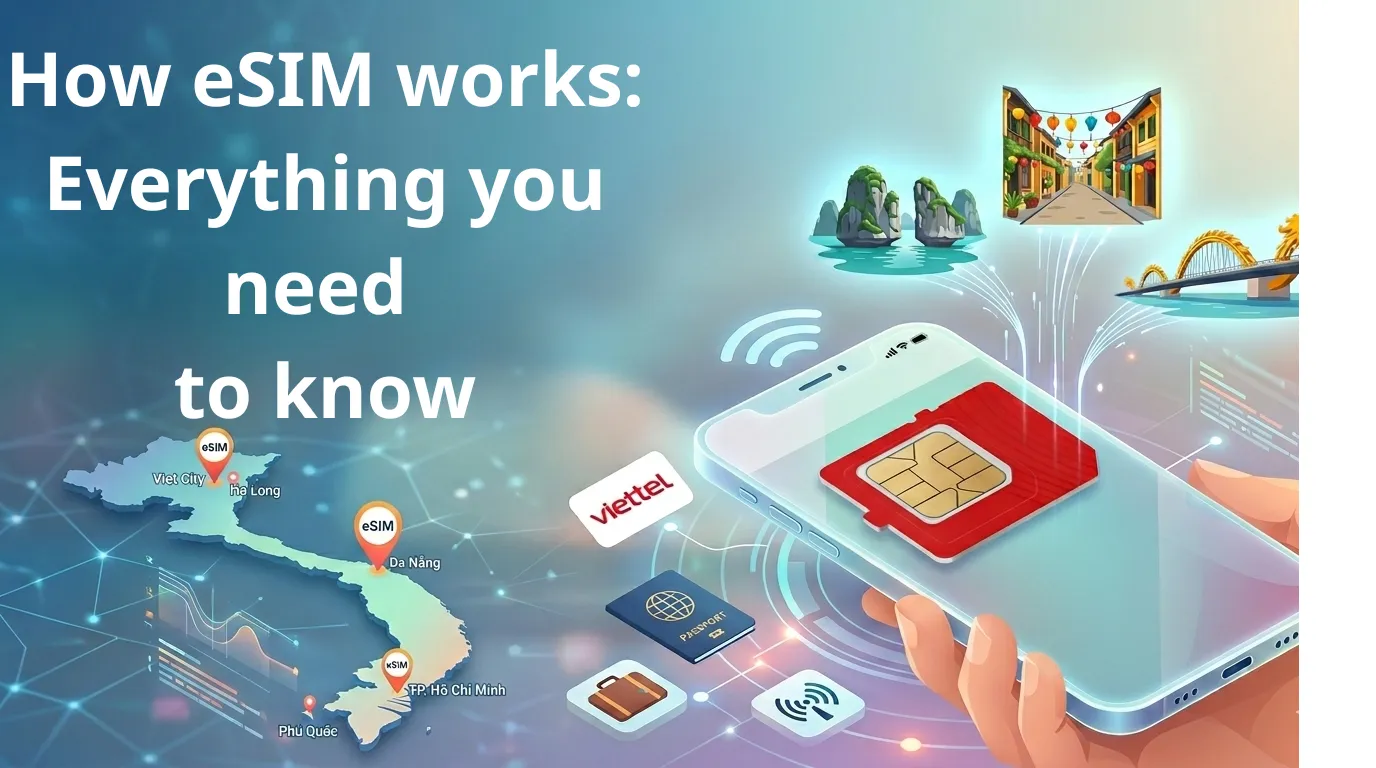
Coverage Across Vietnam’s Most Popular Travel Destinations
After activation, travel eSIM connections typically work across:
Major cities:
Hanoi
Ho Chi Minh City
Da Nang
Cultural destinations:
Hoi An
Hue
Ha Long Bay
Island and coastal areas:
Phu Quoc
Nha Trang
Mui Ne
Mountain regions:
Sapa
This nationwide support makes eSIM ideal for multi-city travel itineraries.
Why Travelers Prefer eSIM Instead of Airport SIM Cards
Physical SIM cards are still available at airports, but digital installation offers several advantages.
Keep Your Primary SIM Active
Using eSIM allows your original SIM card to remain inside your phone.
This means you can:
receive OTP banking messages
keep your original phone number active
use messaging apps normally
while using local Vietnamese mobile data simultaneously.
Faster Setup After Landing
Instead of waiting in airport queues, travelers can prepare connectivity before departure and connect immediately after landing.
This saves time during the most important first hour of arrival.
Better Security During Travel
Physical SIM cards can be lost during replacement.
eSIM profiles remain:
securely encrypted
stored inside device hardware
protected from physical removal
This improves travel safety.
Environmentally Friendly Connectivity
Traditional SIM cards require plastic packaging and distribution logistics.
Using a digital SIM reduces plastic waste and supports more sustainable travel.
Device Compatibility: Check Before Installing a Vietnam eSIM
Before purchasing a plan, confirm your phone supports eSIM technology.
Most compatible devices include:
Apple:
iPhone XS, XR, and newer models including iPhone 11, 12, 13, 14, 15, 16, and 17 series
Samsung:
Galaxy S20, S21, S22, S23, S24 series and Fold/Flip devices
Google:
Pixel 3 and newer
Your phone must also be carrier unlocked.
If your device is locked to a provider such as AT&T or Vodafone, eSIM installation may not be possible.
Common Myths About eSIM Technology
Despite growing popularity, several myths still exist.
Myth: eSIM is slower than physical SIM
Both use the same mobile network infrastructure.
Speed is identical.
Myth: Wi-Fi is always required
Wi-Fi is only needed during installation in most cases.
After activation, your phone connects directly to mobile towers.
Myth: eSIM drains more battery
Modern eUICC chips are optimized for efficiency and typically consume equal or less power.
Troubleshooting eSIM Connection Issues After Arrival
If mobile data does not work immediately after landing, check the following:
Enable Data Roaming for your travel eSIM line
Select the travel eSIM as your primary mobile data line
Restart your phone once after arrival
These steps resolve most connectivity issues within minutes.
Quick Setup Checklist Before Your Vietnam Trip
To ensure everything works smoothly:
confirm your phone supports eSIM
verify your device is carrier unlocked
purchase your travel plan before departure
print the QR code to scan when you at Viet Nam’s airport
activate mobile data after landing
Preparing your connectivity in advance allows you to skip airport SIM counters and start exploring Vietnam immediately after arrival.